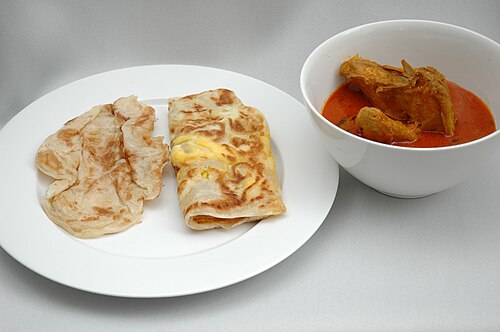
Roti Prata as comfort food — exactly what I needed
Some dishes exist to comfort and Roti Prata is absolutely in that category. The complex and fiery quality works on something almost primal — you feel the warmth of it immediately. coconut milk does work that no substitute can replicate.
the cuisine blends Malay, Chinese, Indian, and Peranakan tradi…
Read full review →
Honest verdict on Roti Prata — good but not exceptional
Roti Prata here was solidly made — richly coconut-sweet without anything to complain about. pandan leaves was present and handled reasonably. But something was missing from the depth that this dish should have.
the cuisine blends Malay, Chinese, Indian, and Peranakan traditions in a unique fusion. …
Read full review →
Roti Prata for a dinner party — went down extremely well
I made Roti Prata for eight guests who had varying familiarity with the cuisine. Every single person asked for the recipe. The fragrant and layered profile was the main talking point — no one had quite experienced sambal belacan paste used that way before.
Singapore's hawker culture was inscribed a…
Read full review →
Why Roti Prata deserves more attention
Roti Prata rarely gets the international recognition it deserves. The richly coconut-sweet complexity is genuine, not simple, and the technique involved in using lemongrass correctly takes real skill.
Singapore's hawker culture was inscribed as UNESCO Intangible Cultural Heritage in 2020. I encount…
Read full review →
A dish that tells its story — Roti Prata reviewed
You can taste history in Roti Prata if you know what to look for. Singapore's hawker culture was inscribed as UNESCO Intangible Cultural Heritage in 2020. The fragrant and layered character reflects those layers — pandan leaves doesn't appear by accident; it came from a specific tradition.
The a ha…
Read full review →
Street food Roti Prata — the authentic version
The best Roti Prata I've ever had came from a street stall, not a restaurant. The complex and fiery intensity was completely different — more direct and uncompromised. coconut milk was used without hesitation, the way it should be.
the cuisine blends Malay, Chinese, Indian, and Peranakan traditions…
Read full review →
Pairing Roti Prata correctly — a note on fresh coconut water
Most people overlook how much the right drink changes Roti Prata. I ordered it with fresh coconut water and the fragrant and layered elements of the dish sharpened considerably against the pairing. lemongrass in particular became more prominent in a good way.
Singapore's hawker culture was inscribe…
Read full review →
Roti Prata exceeded every expectation
I went in with low expectations — I'd had mediocre versions before. What I found was Roti Prata made with real commitment to lemongrass and technique. The deeply umami from prawn paste result was more complex and satisfying than anything I'd had before.
the cuisine blends Malay, Chinese, Indian, an…
Read full review →
Ingredient appreciation — what makes Roti Prata special
What sets Roti Prata apart is the handling of sambal belacan paste. In lesser versions this is treated as a background note. Here it's central and the fragrant and layered result shows it. I've started buying it to cook with at home after this experience.
Singapore's hawker culture was inscribed as…
Read full review →
Cooking class experience — learning Roti Prata properly
I took a cooking class specifically to learn how to make Roti Prata correctly. The instructor explained why lemongrass is used the way it is — something I'd never understood from just eating it. The richly coconut-sweet result when you make it yourself is different.
Singapore's hawker culture was i…
Read full review →